Sunday, January 28, 2018

Public Transport - Pros and Cons


Ahoy Mates!
How are you all?
In relation to the previous post, this time I'm going to talk about public transportation.
Here in Kuwait, public transportation isn't really a stranger to anyone.
But there's such a huge stigma surrounding it that’s it's ridiculous.
So I'm here to hopefully change your opinion about it.
As someone who's been travelling in buses since she was three years old, I think I've had enough experience to speak about this.

There are three main providers of the public transportation in Kuwait – KPTC, KGL and City Bus.
Out of which City BUs has the most number of buses and routes.
These routes are literally spread out to every single place in Kuwait spanning over a large area.
Also, there are many buses available back to back to a popular place such as Maliya.
I use the public transportation to literally go any and everywhere. It's convenient, fast and cheap.
Before getting into why I'm talking about public transport; let's cover few pros and cons.

PROS:

    1. It's cheap: The biggest benefit of public transportation is undoubtedly the cost. You can take a trip from one end of Kuwait to the other end, and it'd still cost you not more than 300 FILS, which is really cheap compared to the cabs and taxis whose fares seem to be increasing day by day. When you want to keep costs to a minimum, public transportation is the way to go.
    If you're a student, you can even travel for free!

   2. Convenient: There are bus routes to every single place you can think of in Kuwait. All you need to know are the routes and the bus numbers.
   
    3.  Eco-friendly: Using public transportation is good for the environment as you’re emitting less pollution into the air. Using public transportation can: improve air quality, reduce greenhouse gas emissions, save energy and minimize impacts.
   
    4. You can be productive: When you’re driving, you have to focus on the road ahead of you. But if you take public transportation, you have time to finish up an assignment, read a book or revise for upcoming tests. Your mind and hands are free to do other things. I usually take a nap on the bus as I have to wake up pretty early in the morning.

    5. No worries about traffic or a parking spot: There's no need to worry about being stuck in traffic, or finding a parking spot in a crowded parking lot. Whether you are headed to work or school, the added time of finding a parking spot can be the difference between being late and making it on time.

    6. Independence: I started travelling in busses In Kuwait since I was a kid. My dad always insisted on us finding our own way and taking care of our own selves. This taught me how to be independent - IF I had to go somewhere and I didn’t have anyone to pick or drop me - that didn’t mean I couldn’t go. I didn’t have t depend on anyone else. I found my own way.

    7. Safety:  A simple benefit you may not consider with public transport is that many times it’s a lot safer than driving yourself. While there is a chance of crashing on a bus, it’s much lower than if you were in your own vehicle. It's definitely way safer to take a bus in Kuwait than a taxi. There have been many cases of rape and kidnapping in taxis but let’s be real - which idiot Is going to try something among 30 - 40 people?!
   
CONS:

    1. Delay: The busses in Kuwait don't follow any strict schedule even though they're pretty regular. Whenever you’re relying on public transportation, there’s a chance you could miss a bus or there could be a cancellation, which might cause you to show up late to a class. This is why it’s important to have alternate options in mind in case you ever need them. Buses can delay, so plan on getting an hour early to your destination in preparation for delays.

    2. Time-Consuming: You may save money, but it’s at the expense of your time. Since buses can delay, you may need to wait around for yours, and they usually won’t get you to school as quickly as you would get there if you drove. It might take longer to wait for your bus, sit through multiple stops and still have to walk or drive home. Also, some routes might be longer and go around a lot of busy areas and the whole trip might take longer.
   
    3. Memorizing routes: Keeping track of the buses/trains, and the stop times can be hectic, especially when there are so many busses. Most transit maps are available for online, but the number of lines and routes intersecting can be overwhelming.

    4. Crowded: Public transportation can be crowded. I’m all for becoming acquainted with the real world, but I don’t need to have the real world’s butt inches from my face, thank you. Some busses that travel to popular areas and during specific times can get pretty crowded when you might not even get a seat and have to take the whole trip either standing or squished between people.

    5. You might have to walk:
    Busses will not pick you up at your house and drop you off exactly at your destination the way a car would. You might have to walk to and from the bus stop which sometimes might be pretty far. Even if it’s raining, you still probably have to walk home.

 Even though public transportation has its drawbacks, they aren’t too big of a deal, and the benefits far outweigh these disadvantages.
   
    The reason I've decided to talk about Public Transportation in Kuwait today is due to the HUGE stigma that surrounds it. Especially among the South-Asian families.
    I have met so many people that act so shocked when I tell them I travel using the busses and judge me because if that. I agree that busses back in our home countries might not be safe at all but it’s a completely different case in Kuwait - it's really the safest mode of transport in here.
    I absolutely hate travelling in taxis. I don’t use them at all except if I have someone along with me to give me company.
    How can travelling along with a strange man be safer than travelling with loads of other people?!
    I have never had to stand in a bus before -no matter how crowded. Being a woman has its perks - men offer you their seats and keep their distance even. They leave the seat beside you empty even if they have to stand.
    I still travel for free in buses due to being a student and it gets me from point A to point B safely and securely and most of the time - on time even.
   
I have compiled a list of all the busses and bus routes in Kuwait for you along with the route maps for you. You can download them from the Resource Library

Join the Fun!
Get Access to the AC Resource Library with just one click!


    Let me know in the comments below what your thoughts are on the Busses in Kuwait.

Wednesday, October 25, 2017

Driving License For Students in Kuwait


Driving License in Kuwait
Ahoy mates!
How are all of you fairing today?
Any storms or any disturbances yet?
For many of you, the first semester has started and you're in the flow of studies. Aren't you?
So today I've got something exciting for all of you.
Anyone living in Kuwait knows how much of a pain it is to get a Driving license. Especially for students.
And you all know I am here to help you all get rid of your problems.
So today I am going to make things easier for you guys. You are struggling enough with your college and course load, you don’t need to be worrying about your license too.
When I wanted to get my Students driving license, as usual, I did not have anyone helping me. Usually, all my friends either had Wasta (we all know nothing happens in Kuwait without wasta) or their dads did all the work. And my dad insisted on me being independent. So I  had to figure everything on my own.
And now I'm here to share the information with you.
So without further ado, lets dive right in!
Conditions:
The only general rule to gain a student's driving license is that you be 18 years of age and studying in a government college or a registered private university, such as – AUK, AOU, ACK, ACM, KU, GUST, BHCK.
The other conditions are all specific to each of the colleges.
Once you are admitted into one of the above universities and reach the age of 18, you have to
  1. Acquire an official document of "Whomsoever it Concerns' where it confirms your admission into the college and your other details.
This procedure or acquirement of the official document has its own set of conditions for each college; here are a few I know-
  • Kuwait University and Gulf University of Science and Technology-
These both Universities only require that you be registered at the University officially.
Kuwait University has a special office called Student's Reception in Shuwaikh, where you have to ask for the Certificate of Whomsoever it Concerns and pay a stamp fee of 1 KD,
GUST students have to visit the registration office and ask for the paper where also you have to pay the stamp fee of 1 KD.
You can receive these certificates on the same day.

  • Arab Open University -
The requirements to acquire the certificate in this university are a bit more -
  1. Complete a whole year of schooling in the college OR have 12 credits.
  2. Must have a GPA of more than 2 points
  3. Must be registered in the current semester and pay the fee in full.
  4. Must have completed basic English levels

Once all these conditions are fulfilled, you have to go to the Registration office and ask for the certificate for the license.
Then you would have to pay 3 KD for the official stamp in the Finance Dept. Once you get a receipt from the Finance department of your payment, you submit the receipt along with your civil ID copy to the Admin office once again.
You will receive the paper in around 10 working days.

  • Australian College Kuwait :
    • One semester to be completed
    • Completed Certain Modules with a certain GPA
    • Must have paid the fees
Once these conditions are completed, you have to go to the Administration office and apply for a license paper, where they’ll let you know which modules are to be completed and how much GPA will be needed. You will also need to pay a Stamp Fee of 3 KD. You will receive your Paper in 3-5 working days.

  1. Prepare your documents :
Once you receive your certificate from your college, it's time to apply for the Learner's license. For this, you will need a few documents -
  1. Your Civil ID copy
  2. Your Passport Copy – first page, last page and the residency page (Make sure that your passport clearly states that you are a student)
  3. Your sponsor's Civil ID copy (usually your father)
  4. Your sponsor's passport copy
  5. Your sponsor's salary certificate
  6. Official document from the university (see pt.1)
Make sure all these documents are renewed and up to date
  1. Your University ID Copy
  2. Two passport sized photos
  3. Application form from the website:
(you can either print it and fill it on your own or have it typed in the printing Section in the Muroor[General Traffic Department])

  1. Check and confirm your Governorate
To apply for the Learner's Driving License you have to first determine which Governorate you belong to so that you can apply to the right Muroor/General Police Department.
Your governorate depends on the Area you live in. Therefore check the list in the Resource Library here to determine your Governorate and find the map of your General Police Department

Access the Governorates of Kuwait and their Areas list in the Driving License Checklist in the Resource Library :


Join the Fun!
Get Access to the AC Resource Library with just one click!


  1. Submit your Documents:
Once you’ve determined your Muroor, it's time to get there along with your documents to apply for the Learner's License.
If you haven't typed out your application form, you can do it any of the Muroor's printing section for a fee of 1 KD.
Buy a stamp of 10 KD to attach to your forms from one of the Stamp Machines.
Depending on your Muroor, find out which floor you have to go to apply for your Learner's License. In Hawally Muroor and the Farwaniya Muroor, it’s the first floor. And the office to the right. It’s the office of the Officer in Charge.
Submit the documents to the officer.
He will tell you to wait for some time while he verifies, signs and stamps your papers.
This brings us to the next step -

  1. Eye Test:
After your application and documents are verified, you will be asked to perform an eye test in one of the Clinics assigned by the General Traffic Departments/Muroor.
This will help them determine whether your eyesight is right and you're fit enough to drive. You will then receive a result paper.

  1. Apply for Learner's License:
Along with the result of your Eye Test and your other documents, you might be asked to attach a recent picture with your glasses on(if you wear them) or they might take a picture of you in the Muroor itself(in Hawally) once you submit your documents in one of the counters in the ground floor. You will receive your Learner's License with an Expiry date of one year the same day along with your picture. This is your official permission to start learning how to drive.

  1. Take Coaching Classes:
Once you have received your Learner's Driving License, you can start taking coaching classes. It's important to take these classes so you're prepared for your Theoretical Test and your Practical test as the Driving Coaches take you to Places made specifically for Practicing the test Materials.
There is no set number of classes you have to take before applying for the test as long as you're confident that you're ready'
The Exact rate for driving Classes is 10 KD for a 2 hours session with a Male and 15KD with a Female for 2 hours.
Here are some of the coaching classes you can consider.

  1. Apply for the Driving Test:
Once you are confident enough in your driving, or the Driving Coach tells you that you're ready, you can apply for the driving test.
Remember to ask your coach for the Theoretical Driving Test Papers or Books and practice - Parallel Parking, Jazeera (Island), The S Drive and other things.
Once you have practiced all these, book your driving test date online.
You can apply for the test online on the Ministry of Interior's Page here :
You can also practice your Theoretical Test on their website :

  1. Give your Driving Test:
As mentioned earlier, your test location will depend on the governorate you belong to. The driving tests for Hawally and Mubarak Al Kabeer are held in Junoob Surra.
This detail will be written on the Website once your reservation is confirmed.
Make sure to arrive early on the test day i.e. around 8/9AM. You will first have to submit your Learner's License also known as Istimara, then you will be asked to give the Theoretical test.
Once you pass, you will receive the result paper of this test. IT IS IMPORTANT. DON’T FORGET TO KEEP THIS WITH YOU. Then proceed to rent one of the learner's cars waiting outside for 10 KD for the test, or you could take your own car too.
The practical test depends on each Governorate  - the easiest is in Shuwaikh whereas Hawally is fairly harder.
If you don’t pass the first time, it's ALRIGHT! TRUST ME, no one passes in the first time unless they have Wasta (which I hope you don’t)
You don’t lose hope, okay?
I failed a total of 4 TIMES! But I finally got it. It's alright to fail. It's not your fault. The rules in Kuwait are getting stricter, so they're just making sure not every Tom, Dick and Harry pass.

  1. YOU PASSED? CONGRATS, YOU CAN PROCEED NOW:
Once you pass, remember to send me a text. I won't mind some pizza too. :D
Anyways, if you pass, you will receive a paper stating that you have passed the test. If you went early morning, then you'll still have time to apply for your License.

  1. Apply for your License :
Once you receive the paper, proceed once again to your Muroor. Go to the 3rd floor in Hawally and submit your Theoretical Test Result paper along with the Practical Test Result paper to the secretary there.
After a while of waiting she'll hand you your file, which consists of the documents you had submitted earlier.
Check and RECHECK THEM. Make sure your College Paper hasn’t expired (it usually lasts for a semester or two months- if a long time has passed, you have to acquire a new paper), your Iqama and residency is up to date (more than 6 months of time before it expires) and everything else is recent.
Once that is done, submit your papers on the ground floor counters for verification and signing.
IF everything is alright, your papers will then be passed on to another guy sitting at the computer who will then type out your details into the system.
Once that is done, you have to submit these papers at counter 1 also known as the Officer in Charge's Office, where you will receive your Driving License!
Yes on the same day!
Your driving license will have the expiry date according to your Residency. If your residency is for 1 year, your driving License will be for a year too, and if you just recently renewed your residency you'll get it for two years!

Remember to Download the Driving License Checklist with loads of other details to be prepared.
 Available in the Resource Library:
Driving License Checklist


Join the Fun!
Get Access to the AC Resource Library with just one click!


So, ladies and Gentlemen, that’s it for today!
May Allah Make it easy for you all to receive your Licenses before the conditions get any harder.
Remember that it's okay to fail, even if you fail 10 times. Just remember to keep asking Allah for help, practicing and being sincere. Don’t ever use illegitimate means, they might affect you in the long run.
I am always here to help you or boost you up when needed. I am just a message/comment/email away.
Let me know in the comments below if you have any questions that you might want to ask.
All the best, and see you guys soon! 

Leave a comment down below if you have any more issues that you'd like me to cover on the blog and I'll try my best to help you out!

Don't Keep this information to yourself. Sharing is caring!

Wednesday, June 7, 2017

Reflections - Fall 2017


Ahoy Mates!
How are you all feeling today?
Now, that the Spring Semester is over, you've got your grades and the summer is starting; what are you guys up to? I would love to hear your summer plans.
As for me, I've got lots of plans. Though I am not taking this summer off (yes, I am going to be attending the summer semester too) there a lot of goals on my list this summer that I look forward to completing.
But before getting into my summer goals, I've decided to start something new.
It's a new blog series called - Reflections.
Basically, at the end of every semester, I'll be posting a few things I've learned that semester, a few things that I did wrong and how I plan to improve for the next semester.
This series will help me stay on track, productive and learn from my past mistakes.
I recommend you all to start working on your Reflections too. You definitely don’t have to dwell on your past but you can learn from it and become better.
So, grab my Reflections Worksheet and get to work!

The first semester I started College was the Spring Semester and not the Fall semester so I am going to post my Reflections on the Spring Semester 2017 -

Things I learnt this semester :

Arabic is not that hard : No I am not kidding, trust me. When I first found out that my whole college degree would be in Arabic, I naturally freaked out. And when I learnt that I had to do a whole foundation semester to improve my Arabic, I freaked out more. Yes, I could read and write and understand Arabic, but when I first started my classes, I was honestly shocked! They all spoke in fluent Classic Arabic. I was absolutely horrified. I couldn’t understand more than a few words since I spoke the Kuwaiti dialect and not the Classic Arabic. Also the fact that Arabic grammar constituted to 80% of the marks upset me. But thankfully I had studied a bit of Arabic grammar in my childhood so that kind of helped me out. I even moved classes (from level 2 to level 1 ) just on the second day of college.
But later on, I regretted it. Level 1 was too easy. I missed level 2 even though I had only been there for two days. Then I changed back again! And I don’t regret a minute of it. I realised that it only seemed hard in the first week. I just had to work a bit harder and focus more. Even though I joined in the second semester and missed most of what was taught, I could easily catch up. I started going on daily walks with a few of my classmates and our professor where we would only speak Arabic and I started improving so much! The daily talks really helped me. And I realised that all the complexity was just in my head. Arabic wasn’t that hard. Yes, I'm not perfect but I've definitely improved and have now developed a new love for this beautiful language.

Making friends is crucial: In the beginning of the semester, I was this very awkward, shy and fully covered up person. Everyone already knew everyone since they had been together for a whole semester already. I was the new kid. Even though I'm a very social person, I just couldn’t seem to make any friends. what's worse, all of them lived in the dormitory, were from different countries and spoke fluent Arabic. After a few weeks of this, I decided that I would give up trying to make new friends. we had literally nothing in common. I loved Kuwait while they all spoke badly about it. And so I thought I was better off without any friends. Oh, how wrong I was!
My classmates all planned a get together in Souq Mubarakiya with the professor and I was contemplating not going, but thank God I decided to go! I sat with new people, made new friends and got to know them all. In addition to this, the early morning pre-class walks helped a lot too. I made friends with people who weren't on my level and it was an amazing feeling. I had someone with whom I could share similar interests and talk about homework. I can honestly say that I wouldn't have been able to pass out with my sanity intact if it weren't for my classmates!

Studying every day is very important : I did this in the beginning of the semester but started to slack off towards the end. And that really cost me my marks. It's really important to come back home Abd study and revise your notes. I had even stopped submitting my homework's towards the end of the semester due to laziness. But next sem I plan to get rid of this habit.

You don’t have to be speaking all the time. Sometimes, silence is golden and better: this was one of the biggest lessons I learnt this semester. Sometimes people say things that you may not agree with or that you don’t like. That does not mean that you have to go running your mouth off. Sometimes it's better to keep quiet. Everyone is entitled to their own opinion. And keeping quiet will prevent so many problems.

Grateful for :
Professor : I am especially grateful for my professor this semester. He had been helping me right from the beginning even before the classes started and helped me throughout the semester. He even helped me choose and register for classes in the next semester. He was really friendly, funny and supportive. Though his methods were strict, they really helped me improve.

Classmates : There were these three girls from Turkey whom I am the most grateful for. They became my friends on the first day when I was this scared little freshman who had no idea about anything. They were so supportive and encouraging and took me under their wing.

My Friend: She was this one friend of mine who knew Arabic. She helped me throughout the semester in chatting, in my homework's, and even attended one of my classes with me where she helped me with the class discussion. It was a blessing having someone like her. Seriously guys get yourselves and Arab or an Arabic speaking friend!

Three things I want to improve in the next semester :
  • Study everyday
  • Put more time into the blog
  • Use extra sources and put in extra work

Overall feel of this semester on the  :
Personal Level - 9 : I grew so much personally and learned loads of things this semester
Academic Level- 8 : My grades were stuck in the 82-83% range but considering the fact that it was completely in a different language, I am happy, kind of.
Social Level -10 : I made so many new friends and built a very good bond with without losing contact with my old friends.
Hopefully, this post will inspire you to start reflecting on your semester and life too.
If you are ready to reflect and improve, grab the Reflections Worksheet from the Resource Library by entering the password or by Subscribing to the Ahoy College Newsletter.


Join the Fun!
Get Access to the AC Resource Library with just one click!


Hit reply to the Reflections Mail you received and let me know,
What are some of the things you would like to reflect upon?
Don't Keep this information to yourself. Sharing is caring!

Sunday, May 28, 2017

How To Make The Best Out Of Ramadan (Ramadan Series-1)


O you who have believed, decreed upon you is fasting as it was decreed upon those before you that you may become righteous.
Baqarah - 183
The month of Ramadan is that in which was revealed the Qur’an, a guidance for the people and clear proofs of guidance and criterion
Baqarah – 185

Assalamu alaikum!
 Ramadan Mubarak to every one of you.
Ramadan is a blessed month awaited every year by Muslims all over the World.
This is the month when the Quran was revealed.
So, let’s all use this month to strive to get good deeds, build a relationship with Allah and Quran and get closer to Him.
Today I want to share a few tips with you all to stay productive in Ramadan. This month is too short so let’s all make an effort to utilise every single moment.

1.       Quran: As we all know, Ramadan is the month of Quran, the month when this Holy Book was revealed. So, let’s use this month to form a strong bond with the word of Allah SWT. Read Quran every day. Remember that it’s not important how many times you finish the Quran in this month but rather how much you understood.
A practical advice I would like to give you all is to not jump in right away and start reading two-three pages every day. Because let’s face it, it’s impossible to cover even one page if you haven’t been reading it at all earlier.
So rather focus on reading at least an Ayah every day, understanding it, pondering over it and connecting it to your life. Listen to Tafseer or lectures regarding the surah and understand what they are saying.
Make a QURAN PLAN for Ramadan, where you write down what surah you covered and what you learned from them – pillars of Iman, Allah’s Names and Attributes, Commands and Prohibitions etc.
Remember it’ not the quantity that matters, it’s the quality.

2.       Dhikr – Constantly keep the remembrance of Allah on your tongue. Yes, the Shayateen and Jinnat are chained but your biggest challenge is you yourself- your desires. So keep remembering Allah and doing Dhikr. LA ilaha illa Allah, Subhanallahi WA bi hamdihi, Subhanallah IL azeem and many others are words that are light on the tongue but heavy on the scales.

3.       Faraid (obligations) – yes Ramadan is a month for gaining good deeds. For doing Qiyam, for giving charity. But what’s the point in doing all this when you’re missing out on your Faraid (obligations)?
You sleep and miss your Fajr Prayer but go out for Taraweeh?
Focus on your Obligations first. If throughout the year, you haven’t been able to pray all five prayers, make an effort to change that in Ramadan. Struggle to complete your obligations and then think about the Voluntary actions. The voluntary actions won’t make any difference if your obligations aren’t complete. Think of your obligations as the pillars of a building (Iman) and voluntary acts as the decoration inside. If the pillars are wobbly, will the decorations stay?

4.       Continue your efforts after Ramadan : A good way to know if your fasts will be accepted is by looking at yourself on the Eid day. How are you behaving? Are you going back to how you were before Ramadan? Back to Music, back to Missing prayers and back to swearing?
If this is the case, then it might be a warning sign. A sign of the acceptance of your fasts is that your efforts and deeds continue even after Ramadan.

5.       Taqwa – Increase your Taqwa in this month. Be extra aware of what you’re doing, what you’re saying, what you’re eating! Hold yourself accountable before you’re held accountable. Rectify your deeds and ask for forgiveness

6.       Dua – Make loads and loads of Dua in this month. In one of the Hadith of the Prophet SAW he mentions that Allah SWT accepts the dua of a slave every day. Make a List of things you want to ask Allah SWT and sit at the time of Iftar and ask Allah SWT – everything. Nothing is too small or too big for Him. Ask for Jannat ul Firdaus, ask for HIS forgiveness, ask for that new shirt you want to buy for Eid- anything, Just ASK!

7.       Goals- Make a list of goals you want to achieve in this Ramadan. Break down these goals into small actionable steps and work on them every day. Make an everyday checklist with items from this list and work on them. This will prompt you to be more productive and accountable. At the end of the month, you can even reward yourself when you achieve these goals. Some examples could be –

·         Hifz Amma Para
·         Help mum with chores
·         Read two ayahs every day and ponder over them
·         Do a good deed that nobody knows for Allah’s sake

8.       Charity- every small deed in this month counts. Start by giving a small amount every day. It doesn’t have to be money. Even a smile is Charity in Islam! You could give even a 100 fils every day and it would count for a lot depending on your intention.

9.       Intention: the most important part. No matter what you do, make an intention to do it solely for Allah’s sake. Seek only His pleasure, only His closeness.

10.   Relationships – take this month to improve relationships with your friends and family. Visit them. Go to Iftar parties. Invite them. And talk about Allah SWT. Share knowledge that each of you has. Use each other to get closer to Allah SWT. Talk about the prophets, about the Sahabahs, and share your pondering over the Quran with them.

I hope these few tips will help you to make the best out of this blessed month.
With loads of Love,
Halima.

Check out the Next Post in the Ramadan Series - How to Prepare for Ramadan

Don't Keep this information to yourself. Sharing is caring! 

Wednesday, May 10, 2017

My Favorite College Apps


Ahoy mates,  
How are you all feeling today? 
In today's busy, busy world, the only thing we actually have time for is our phone. 
And with the advancement technology has made, every single thing is easily available on the small box that we have stuck to our hands. 
Since it makes our life so easy why not also make our college life easy? 
Trust me when I say that there are loads of apps that could help you in finishing your homework, getting organized, productive and help you survive. 
It's basically just a free virtual assistant. 
So here are some of my favorite, free apps that'll help you get your life together. 

  1. Alarmy - Sleep if you can!-  With a tagline like that, it's easy to understand why Alarmy won the award for being the 'world's most annoying alarm'. 
It has got many different ways of waking you up- and making sure you stay up- such as solving a math question, taking a picture similar to the one you took earlier, shaking the phone a number of times and the default feature where you just swipe to dismiss the alarm. 
I've been using this app for a long time and trust me it's perfect for when you have early morning classes that you don't want to get up for but have to. 


  1. Sworkit! - So, how many years have passed with us making new resolutions to stay fit and exercise every day? But in the end, after a day or two, we switch back to our very yummy burgers and lounging lazily on the couch. If you are one to avoid  the gym (simply because you are lazy to go), this app is perfect for you. It has many equipment-less exercises and timed circuits that you can do right in your dorm room – on the couch – no gym required! So, sorry mate, now you've got no excuse to NOT exercise. 
BONUS: it also syncs to your Google Fit account to keep track of your progress! 


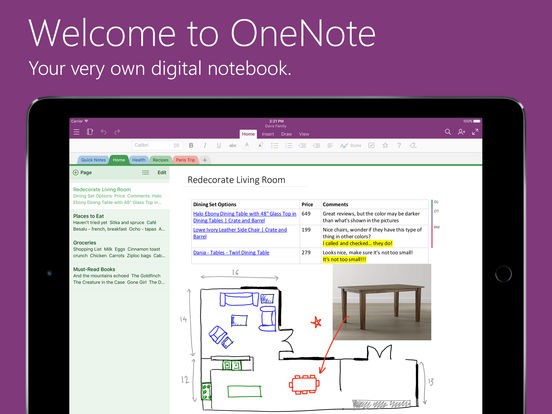
  1. OneNote - If you are crazy about organizing and having everything sorted into its own category, this app is for you. It allows you to make notebooks, have sections in those notebooks and also insert pages into those sections. Isn't that amazing?! Perfect for taking notes, making lists, planning projects; basically everything. You can color-code your notes, pages and sections; highlight important stuff; share notes and collaborate on group projects; and also access it anywhere- phone, computer, iPad, tab wherever!. 
It also allows you to search your notes, convert text from images into text, and save documents inside your notes. 


  1. Talabat – This app is for those times when your stomach starts growling in the middle of the class or you have a sudden craving to eat a specific food. Order from thousands of restaurants easily with just a few clicks. It will also suggest restaurants close to your area and based on your previous orders. Easy, simple and effective. 

  1. Duolingo -  Want to learn a new language? This is the app for you if you're taking a foreign language class or want to learn a new language just because you can . Its easy to use and very interactive. With its preset classes and tests, its very fun and addictive. 


  1. Google Fit - Reach your fitness goals. Set goals based on steps, time, distance, calories burned. Receive personalized recommendations and coaching for activity goals. If you're like me, a person who love to keep track of every activity then this app is perfect for you. It also syncs with Sworkit to record your progress and calories. Effortlessly track any activity. As you walk, run, or cycle throughout the day, your phone or Android Wear watch automatically logs them with Google Fit. 

Image result for google fit apple store

  1. Almaany – This is the best app if you are living in an Arab country or are learning Arabic. We all know the disastrous translations of Google translate. Almaany gives many meanings for the same word, and many forms of the same word. It is basically like an online dictionary, just compact and better. 

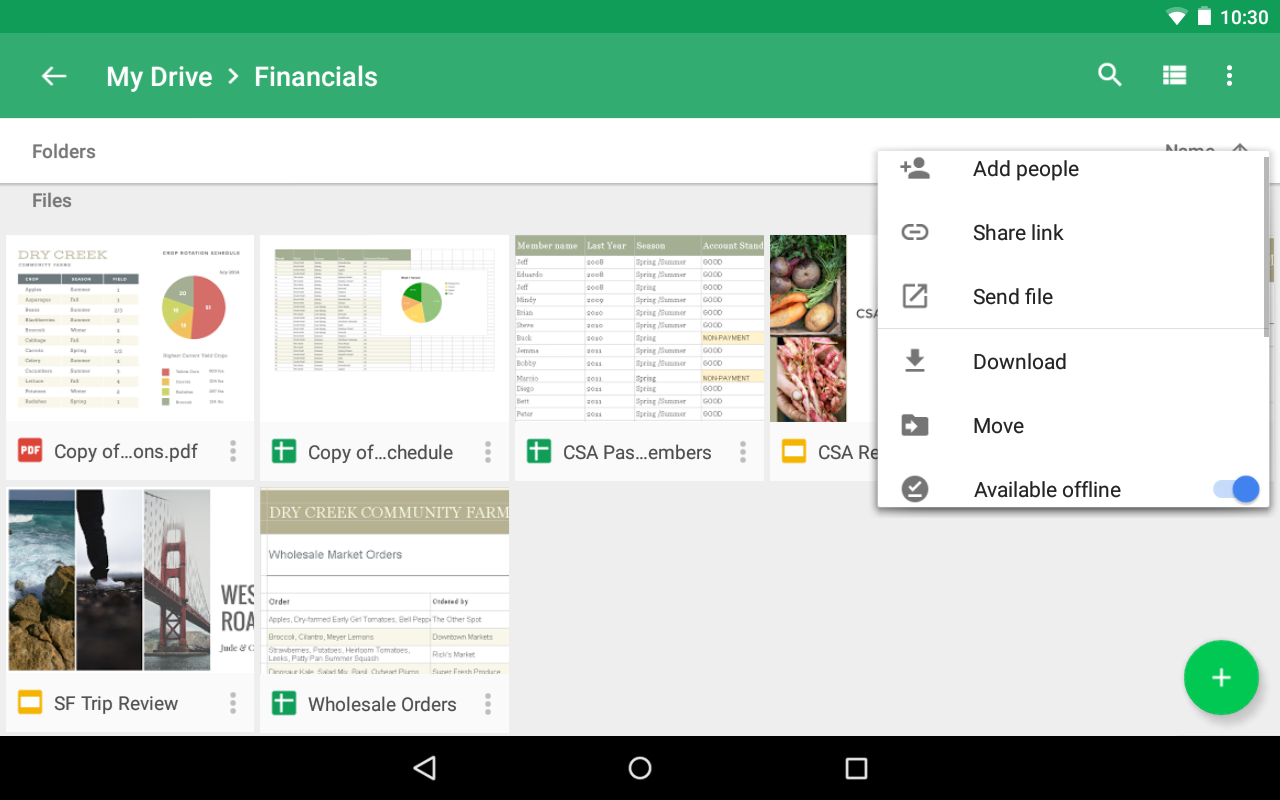
  1. Google Drive : One of the best collaboration tools, which is often used in working for group projects and assignments or to facilitate communication in study groups. But it can also be used for organizing your study. Store your folders and important documents online to access it anytime and anywhere. Easy access and easy editing. 

Image result for google drive

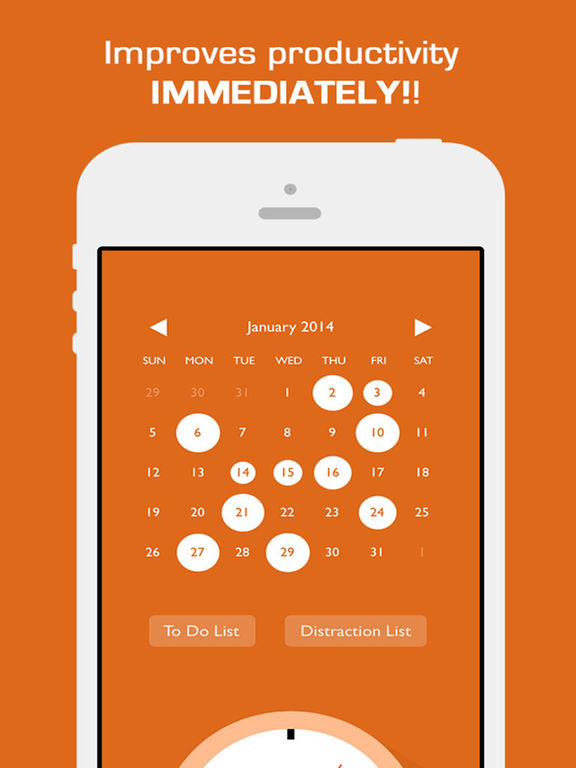
  1. Flat Tomato : This is my favorite app to use for the Pomodoro method. Pomodoro method is a productivity trick to help you stay organized and productive where you work for 25 mins and then take a break of 5 minutes and then after every 4 Pomodoro sessions you take a long break. It is easy to use, and is perfectly-aligned with Pomodoro, including timing the intervals, the breaks, and remembering that you've done 4 cycles so you need a longer break. It also tracks user-defined categories so you can review how you've spent your time (in an attractive, graphical chart). It also shows the status of the current interval on the lock screen. 


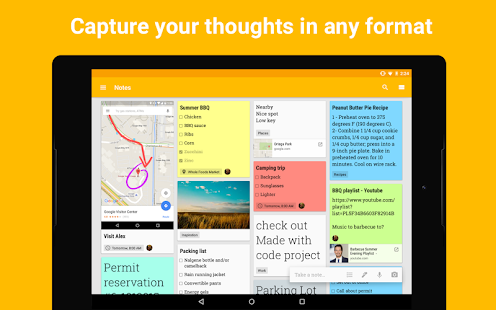
10. Google Keep : Google Keep is a syncing notepad that connects to Google Drive. It also supports photo notes, voice notes, and checklists. it lets you quickly take and save those notes, photos, voice memos, and checklists to Google Drive, and then access them again on any other web-connected device you use. It's ideal for quick note-taking on the go, anyone who appreciates simple, fast note-taking tools or to-do apps, or for saving notes on the desktop that you know you'll need on your Android phone, like shopping lists, addresses, phone numbers, checklists and to-do lists, or conference call codes. Perfect for college students as we have loads of things going on at once and its hard to remember them all. 

Image result for google keep

Help others find this page by pinning this infographic!


I hope these apps are as useful to you as they were to me! 
Do you have any favorite apps that make your life a bit more easier? 
Have you used any of these apps? What do you think? 
Don't Keep this information to yourself. Sharing is caring!